
In today’s fast-paced digital landscape, staying ahead of the curve is crucial for businesses looking to thrive. The world of digital products is continuously evolving, driven by rapid technological advancements and changing consumer preferences. As we explore the innovations in digital product design in 2025, we uncover key trends that are reshaping how users interact with technology and how businesses deliver value. From enhanced user experiences to the integration of artificial intelligence, these trends highlight the importance of adaptability and creativity in product development.
One of the most significant trends in digital product design is the rise of personalized experiences. With advancements in data analytics and machine learning, companies can now tailor products and services to meet individual user needs more effectively than ever before. This customization ranges from personalized content recommendations to adaptive user interfaces that change based on user behavior. Businesses that leverage these technologies not only improve user satisfaction but also increase customer loyalty, as users feel more connected to products that cater specifically to their preferences.
Another notable trend is the integration of augmented reality (AR) and virtual reality (VR) into digital products. These immersive technologies are transforming how users interact with digital environments, providing a more engaging and interactive experience. In the realm of e-commerce, for instance, AR allows customers to visualize products in their own space before making a purchase, significantly enhancing the shopping experience. Additionally, VR is being utilized in training and simulation applications, offering users realistic scenarios that can improve learning outcomes. As AR and VR technologies continue to advance, we can expect even more innovative applications across various industries.
Sustainability is also becoming a central theme in digital product design. As consumers become more environmentally conscious, businesses are responding by creating products that prioritize sustainability. This includes everything from energy-efficient software solutions to digital platforms that promote eco-friendly practices. Companies are not only focusing on the sustainability of their products but also on their operational practices, ensuring that their digital offerings align with a broader commitment to environmental responsibility. This shift towards sustainability is not merely a trend; it reflects a fundamental change in consumer values and expectations.
Moreover, the concept of “no-code” and “low-code” development is gaining traction. These platforms enable users—regardless of their technical expertise—to create and modify digital products with relative ease. As businesses seek to encourage innovation and streamline their development processes, no-code and low-code tools are empowering teams to bring their ideas to life quickly. This democratization of technology fosters creativity and accelerates the delivery of digital solutions, making it easier for organizations to meet the evolving needs of their customers.
Additionally, the emphasis on user experience (UX) continues to grow. As competition intensifies across various digital markets, companies are increasingly recognizing the value of exceptional UX design. This trend is pushing businesses to invest more in user research, usability testing, and design thinking methodologies. By prioritizing UX, organizations can create products that not only meet functional requirements but also provide delightful and intuitive experiences for users.
Finally, the role of artificial intelligence in digital product innovation cannot be overlooked. AI is not only streamlining processes but also enabling smarter decision-making and enhanced user interactions. From chatbots that provide customer support to predictive analytics that anticipate user needs, AI is transforming how businesses operate and engage with their audiences. As AI technology continues to improve, its applications in digital product design will undoubtedly expand, offering even more opportunities for innovation.
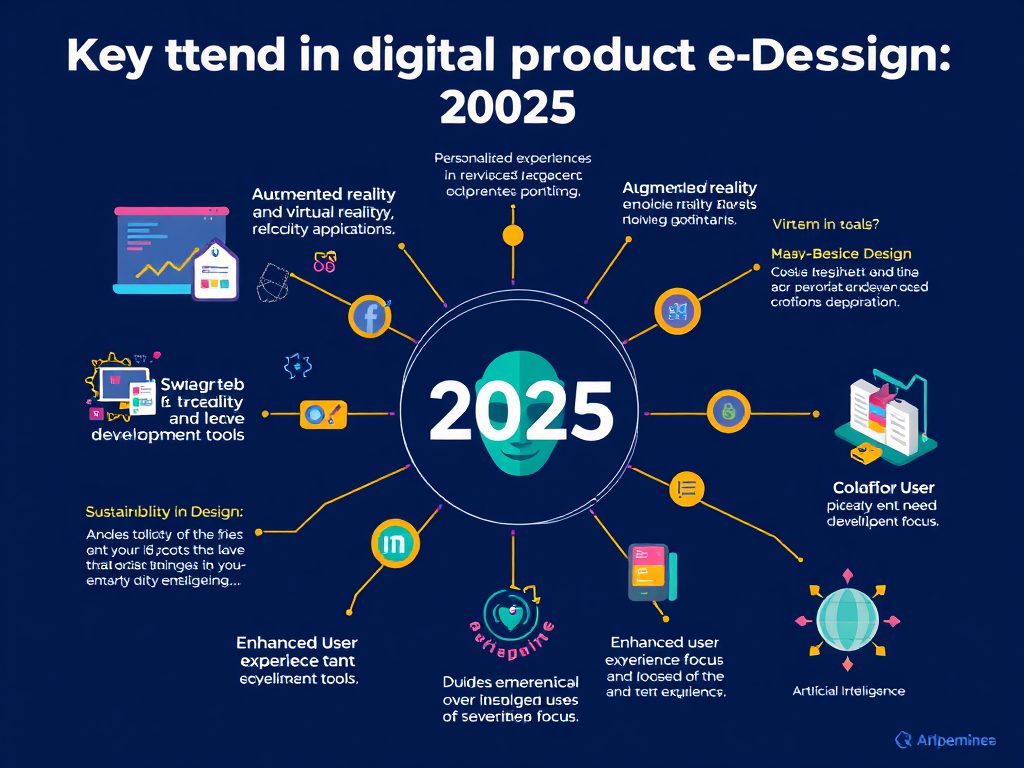
In summary, the landscape of digital product design in 2025 is characterized by personalization, immersive technologies, sustainability, accessible development tools, enhanced user experiences, and the integration of artificial intelligence. By staying attuned to these trends, businesses can position themselves for success in an ever-changing digital world. Embracing innovation and adapting to consumer expectations will be essential for companies aiming to thrive in this competitive landscape. As we look forward, the possibilities for digital products are limitless, and the only constant will be change.

Daniel Wright
This post captures the essence of what we need to focus on moving forward. Embracing innovation is crucial for success in our digital age.
Emily Carter
The shift towards sustainability in digital design is so refreshing! It’s great to see companies taking responsibility for their environmental impact.
Jessica Adams
Great insights on the future of digital product design! I’m particularly interested in how businesses will adapt to these emerging trends.
David Lee
AI integration is fascinating! It’s incredible how chatbots and predictive analytics can enhance user experiences and streamline operations.
Sophia Green
I appreciate how you addressed the importance of creativity in product development. It’s essential for companies to think outside the box!
Michael Brown
The rise of no-code and low-code solutions is amazing. As a non-techie, I appreciate the ability to create my own digital solutions without needing extensive coding skills!
Chris Turner
The trends you highlighted are spot on! I can’t wait to see how these technologies evolve and shape our digital interactions in the coming years.
Sarah Thompson
This article really highlights the importance of staying adaptable in product design. I’m especially excited about the integration of AR and VR – it’s such a game changer for e-commerce!
Linda Johnson
Exceptional UX design is definitely key in today’s market. Companies that invest in user research will surely stand out from the crowd.
James Mitchell
I love how you emphasized personalization in digital products. It truly makes a difference when companies understand our individual needs!