In the ever-evolving landscape of technology, digital products continue to redefine how we interact, work, and live. As we navigate through 2025, several trends have emerged, shaping the future of digital products and offering exciting opportunities for businesses and consumers alike. From enhanced user experiences to the integration of artificial intelligence, these trends are set to dominate the market and influence consumer behavior significantly.
One of the most significant trends is the rise of personalized experiences. With advancements in data analytics and machine learning, companies can now tailor their offerings to meet the specific needs and preferences of individual users. This personalization extends beyond traditional e-commerce recommendations; it encompasses everything from content delivery to app functionalities. For instance, streaming services are leveraging user data to curate personalized playlists, ensuring that users are constantly engaged with content that resonates with their tastes. As consumers increasingly expect brands to understand their unique preferences, businesses that prioritize personalization will likely see higher customer satisfaction and loyalty.
Another key trend is the growing importance of user-centric design. As digital products become more complex, the demand for intuitive and seamless interfaces has never been higher. Companies are investing in user research and testing to ensure their products are not only functional but also enjoyable to use. This shift towards user-centric design is also evident in the rise of low-code and no-code platforms, which empower non-technical users to create their applications without extensive programming knowledge. This democratization of technology allows businesses to innovate quickly and respond to market demands more efficiently.
Sustainability is also becoming a crucial factor in the development of digital products. As awareness of environmental issues grows, consumers are increasingly favoring brands that prioritize eco-friendly practices. Digital products are not exempt from this trend; companies are exploring ways to reduce their carbon footprint through sustainable design and development processes. For example, software companies are optimizing their applications to consume less energy, while hardware manufacturers are focusing on recyclable materials and responsible sourcing. Embracing sustainability not only meets consumer expectations but also positions businesses as leaders in corporate responsibility.
The integration of artificial intelligence (AI) into digital products continues to transform various industries. From chatbots enhancing customer service to machine learning algorithms powering data analysis, AI is becoming an integral part of digital experiences. In 2025, we are witnessing a surge in AI-driven applications that can automate mundane tasks and provide insights that were previously unattainable. For instance, in the healthcare sector, AI is assisting doctors in diagnosing conditions more accurately and quickly than ever before. As AI technology becomes more advanced, its applications across different sectors will only expand, leading to more innovative and efficient digital products.
Moreover, the rise of the metaverse is reshaping how we perceive digital interactions. The concept of immersive virtual environments is gaining traction as businesses explore ways to engage customers in new and exciting ways. From virtual storefronts to interactive gaming experiences, the metaverse offers a unique platform for brands to connect with their audience. As technology continues to advance, we can expect to see more brands investing in metaverse experiences, creating opportunities for immersive storytelling and community engagement.
Finally, the shift towards subscription-based models is changing the way consumers access digital products. Instead of making one-time purchases, users are increasingly opting for subscription services that provide continuous access to software, content, and services. This trend allows businesses to build recurring revenue streams while offering users flexibility and variety. As more companies adopt subscription models, it will be interesting to see how this impacts consumer behavior and the overall market landscape.
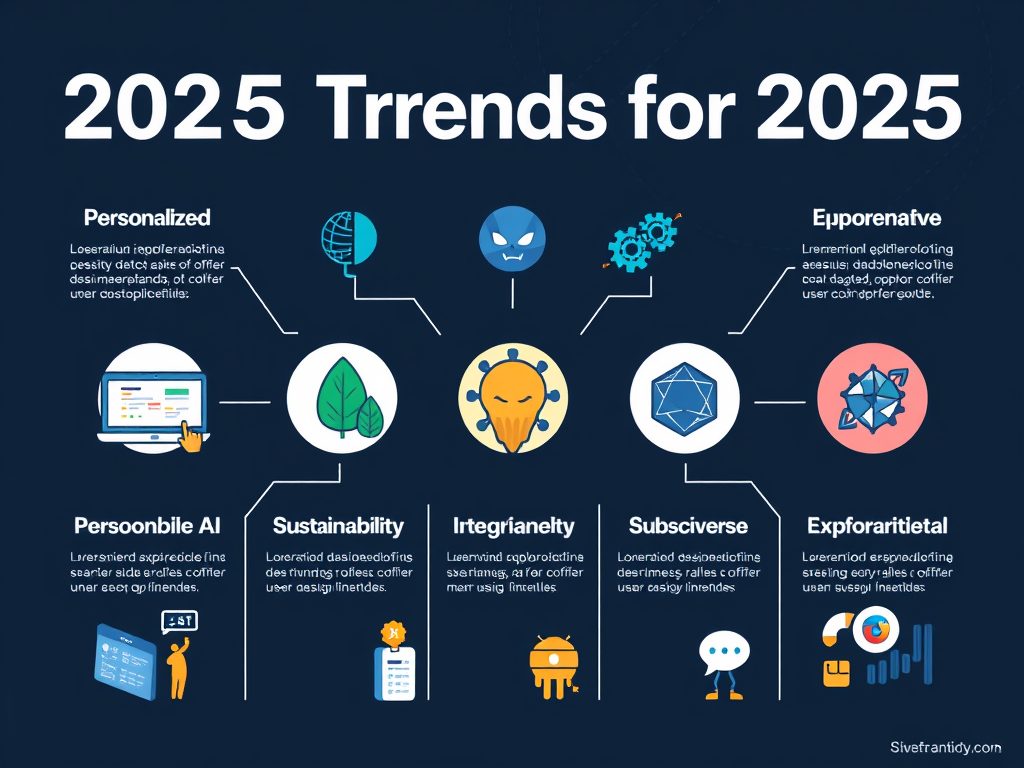
In conclusion, the digital product landscape in 2025 is characterized by personalization, user-centric design, sustainability, AI integration, metaverse exploration, and subscription-based models. As these trends continue to evolve, businesses must adapt to stay relevant and meet the ever-changing expectations of consumers. By embracing these trends, companies can innovate effectively, enhance user experiences, and ultimately drive growth in the competitive digital market.

Michael Smith
Great read! I’m especially intrigued by the rise of the metaverse. It seems like a game-changer for brands looking to engage customers in more immersive ways. Excited to see where this goes!
Aisha Khan
I love how you highlighted sustainability as a key trend. It’s so important for businesses to be environmentally conscious. Looking forward to seeing brands take more responsible actions!
James Anderson
The integration of AI into digital products is truly revolutionary. The potential for improving efficiency in various sectors is enormous. Thanks for sharing these insights!
Emily Johnson
This is a fantastic overview of the digital product trends for 2025. I particularly resonate with the emphasis on personalized experiences. It’s amazing how technology can tailor services to our individual needs. Can’t wait to see how this develops!
Chris Wilson
The trends you’ve outlined are spot on! I’m particularly interested in how businesses will leverage AI to improve customer service. It’s an exciting time for digital products.
Mia Patel
The future looks bright with these trends! I especially think the personalization aspect will lead to more meaningful customer relationships. Thanks for the informative post!
David Lee
Subscription models are definitely changing the way we consume digital products. It’s interesting to see how businesses adapt to this shift. Will be watching this space closely!
Sophia Brown
Fantastic insights on user-centric design! It’s about time that companies focus on creating enjoyable and intuitive interfaces. This will definitely enhance user satisfaction.
Linda Garcia
I appreciate the mention of low-code and no-code platforms. It’s empowering non-techies to innovate and contribute to product development. This trend will democratize technology even further!